How Microbots Are Transforming Surgery—and What the Future Holds
How Microbots Are Transforming Surgery—and What the Future Holds
Introduction
Imagine a future where surgeons can treat disease using machines so small that they can travel through the human body and perform highly precise medical tasks.
That future is gradually moving closer to reality through microbots—tiny robotic devices designed to move, sense, deliver treatment, or assist with medical procedures inside the body.
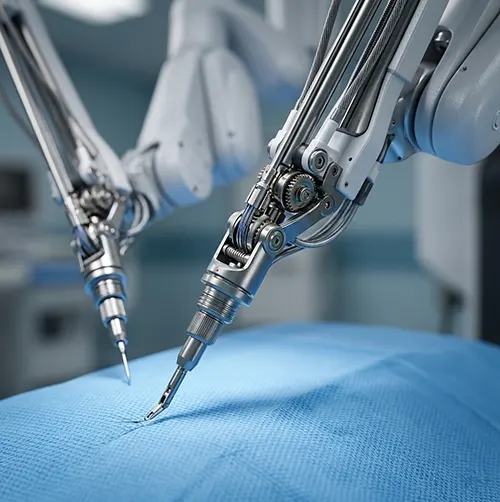
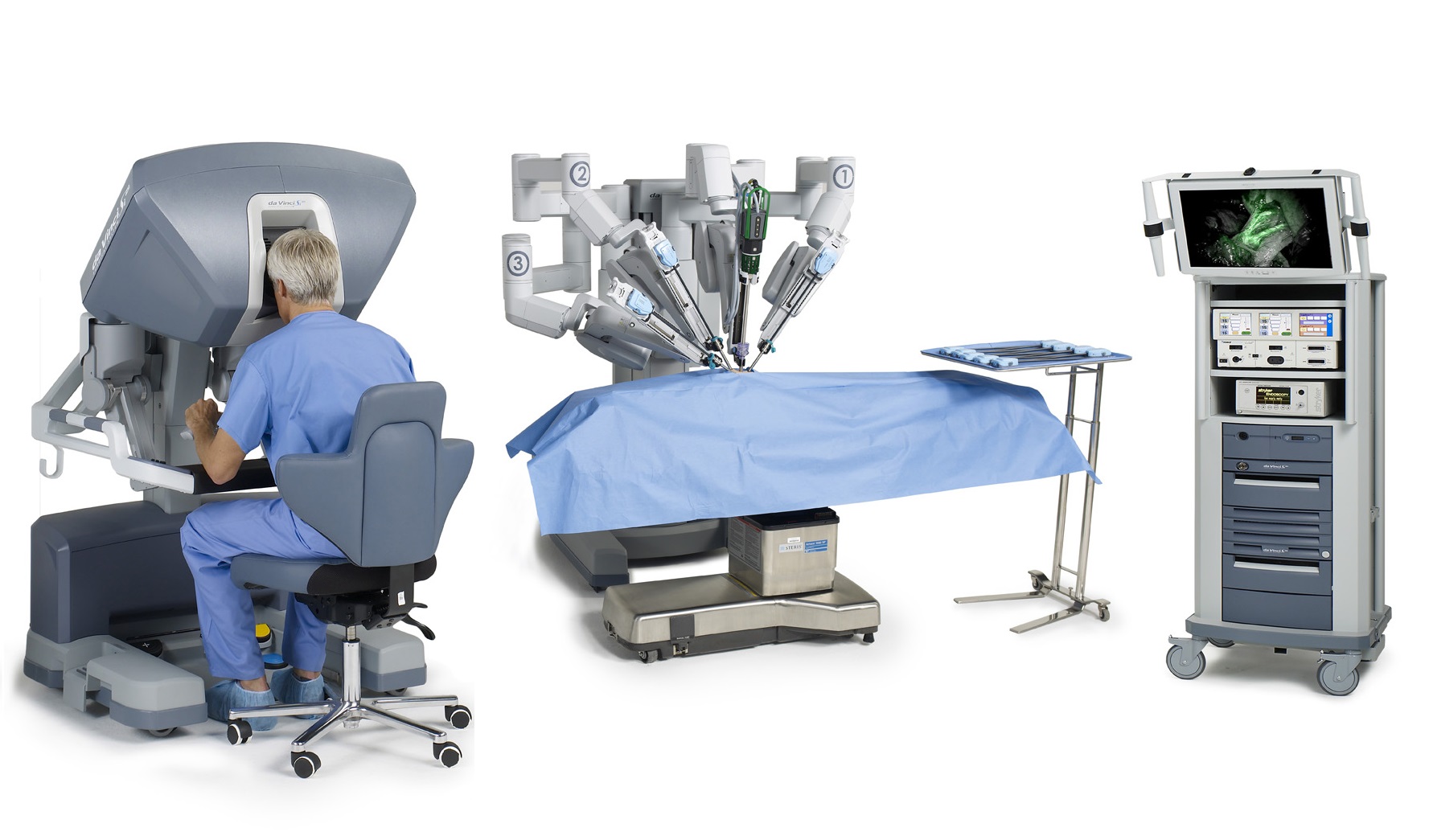
Traditional surgery often requires large incisions, longer recovery periods, and a greater risk of complications. Modern surgical robots have already helped make many procedures more precise and minimally invasive. The next step may be even smaller: microscopic or millimeter-scale robots capable of reaching difficult areas inside the human body.
Microbots are still largely an emerging technology, and many applications remain in the research and experimental stages. However, their potential could transform the future of surgery and medicine.
🤖 What Are Microbots?
Microbots, sometimes called microrobots, are extremely small machines designed to perform specific tasks. Depending on their design, they may range from millimeter-sized devices to structures measured on the microscopic scale.
In medicine, researchers are exploring microbots that could:
- Move through blood vessels or other pathways
- Deliver medicine directly to a targeted location
- Assist in removing blockages or damaged tissue
- Carry miniature sensors or cameras
- Perform highly precise tasks in hard-to-reach areas
- Support minimally invasive surgical procedures
Unlike the large robotic systems used in many operating rooms today, microbots are designed to work inside or very close to the target area.
🏥 How Microbots Can Be Used in Surgical Operations
1. Targeted Drug Delivery
One of the most promising applications is targeted drug delivery.
Instead of sending medication throughout the entire body, a microbot could potentially carry a therapeutic substance closer to the affected area.
For example, researchers are investigating systems that could help deliver treatment to specific tumors or localized disease sites.
Potential Benefits
- Reduced exposure of healthy tissue
- More targeted treatment
- Potentially lower side effects
- Better control over where treatment is delivered
The challenge is ensuring that the microbot can safely navigate, release its payload accurately, and either leave the body or safely break down afterward.
🩸 2. Working Inside Blood Vessels
Some areas of the human body are extremely difficult to reach using traditional surgical tools.
Microbots could potentially navigate through blood vessels or other natural pathways to reach locations that would otherwise require more invasive procedures.
Possible future applications include:
- Assisting with the treatment of vascular blockages
- Delivering medicine to specific locations
- Supporting procedures in narrow or delicate blood vessels
- Performing localized diagnostic tasks
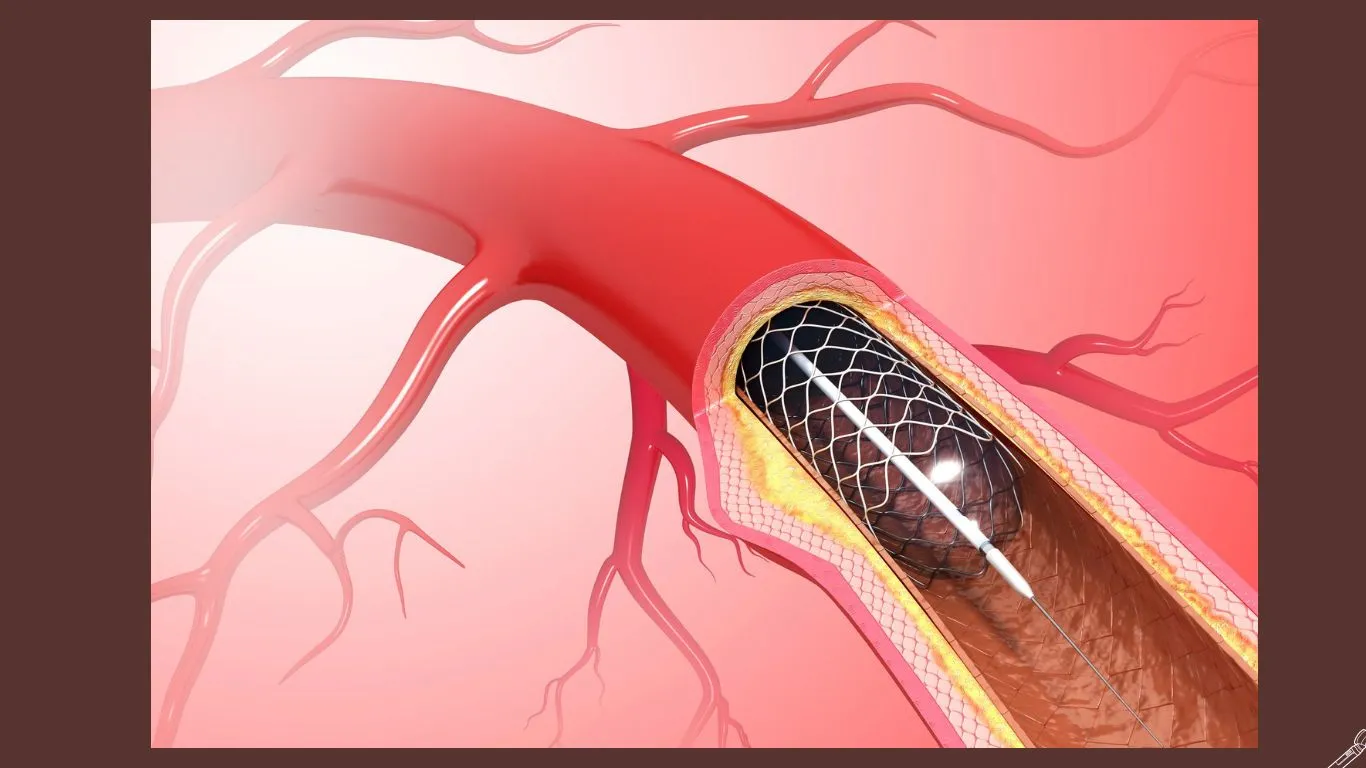
The smaller the device becomes, however, the more difficult it is to control. Researchers are developing different methods, including magnetic fields, ultrasound, light, and chemical propulsion.
🎯 3. Highly Precise Surgery
One of the biggest advantages of robotic technology is precision.
Microbots could eventually allow doctors to interact with extremely small structures inside the body. This could be especially valuable in areas where even tiny movements can matter.
Potential fields include:
- Eye surgery
- Neurosurgery
- Cancer treatment
- Cardiovascular procedures
- Microsurgery
A human surgeon would not necessarily be replaced. Instead, the surgeon could remain in control while using advanced imaging, software, and robotic systems to guide the microbot.
🔬 4. Diagnosis and Monitoring
Microbots may also become diagnostic tools.
Imagine a tiny device capable of traveling to a specific location, collecting information, and sending data to an external system.
Future microbots could potentially include:
- Miniature sensors
- Imaging technology
- Chemical detectors
- Temperature sensors
- pH sensors
This could allow doctors to collect information from inside the body with less invasive procedures.
⚙️ How Are Microbots Controlled?
Controlling a tiny robot inside the human body is one of the biggest engineering challenges.
Researchers are exploring several approaches.
Magnetic Control
External magnetic fields can potentially guide specially designed microbots.
This approach is attractive because it may allow movement without requiring large onboard motors.
Ultrasound
Sound waves may be used to influence or propel microscopic devices.
Light-Based Control
Some experimental systems respond to specific types of light.
Chemical Propulsion
Certain micro-scale devices can move using chemical reactions, although this approach presents additional challenges when designing systems that are safe for use inside the human body.
🚀 The Future of Microbots in Medicine
The future could involve much more than simply making robots smaller.
The most powerful medical systems may combine multiple technologies:
Microbots + AI + Medical Imaging + Advanced Sensors + Robotics
Artificial intelligence could help analyze medical images and assist with navigation. Advanced imaging systems could help doctors track the position of a microbot in real time.
A future surgical workflow might look something like this:
Step 1: Diagnosis
Advanced imaging identifies the exact location of the medical problem.
Step 2: Planning
Software helps doctors determine the safest path and treatment strategy.
Step 3: Navigation
A microbot is guided toward the target area using a controlled system.
Step 4: Treatment
The device performs a specific task, such as delivering medicine or assisting with a localized procedure.
Step 5: Monitoring
Doctors confirm the result using imaging and sensor data.
Step 6: Safe Removal or Biodegradation
Depending on the design, the device may be removed, retrieved, or designed to safely break down after completing its task.
📈 A Possible Future Timeline
The exact timeline is uncertain. Medical technologies must go through extensive research, testing, safety evaluation, and regulatory approval before they can become widely available.
⚠️ Challenges That Must Be Solved
Despite their potential, medical microbots face major challenges.
Safety
A device operating inside the human body must not damage healthy tissue or cause unexpected complications.
Navigation
The human body is a dynamic environment. Blood flows, organs move, and pathways are complex.
Power
Traditional batteries are often impractical at extremely small sizes.
Communication
Doctors need reliable ways to know where the device is and what it is doing.
Biocompatibility
Materials must be safe for the human body.
Cost and Accessibility
Even if the technology works, it must eventually become practical and affordable enough for hospitals to use.
🧠 Will Microbots Replace Surgeons?
Probably not.
The more realistic future is one of human-machine collaboration.
Surgeons bring medical knowledge, judgment, ethics, and the ability to respond to unexpected situations. Microbots could provide capabilities that human hands cannot achieve at extremely small scales.
Instead of replacing doctors, robotic technology may give surgeons better tools.
🌍 Beyond Surgery: Other Future Applications
Microbots could also have applications beyond surgical operations.
Potential Areas
- Cancer treatment
- Drug delivery
- Internal diagnostics
- Tissue repair
- Dental medicine
- Precision medicine
- Medical research
As materials science and nanotechnology continue to improve, researchers may be able to create devices that are smaller, safer, and more capable than today's experimental systems.
⚡ The Role of Artificial Intelligence
AI could play an important role in the future of microbot-assisted medicine.
AI systems may help with:
- Navigation planning
- Medical image analysis
- Real-time tracking
- Movement prediction
- Surgical decision support
- Detecting unusual conditions
However, AI would need to be carefully tested and used under appropriate medical oversight. In high-risk procedures, reliability and patient safety are far more important than technological novelty.
🎯 Reality Check
Microbots performing complex autonomous surgeries inside the human body are not yet an everyday reality.
Many of the most exciting concepts remain in laboratories, prototypes, or early-stage research. Turning these ideas into widely used medical technology requires years of testing and validation.
But the direction is clear: medicine is becoming increasingly precise, minimally invasive, and technology-driven.
🔥 Final Thoughts
The future of surgery could be dramatically different from the way we imagine it today.
Instead of making large incisions, doctors may increasingly use intelligent tools that can reach specific areas of the body with remarkable precision.
Microbots could eventually help make treatment:
- Less invasive
- More precise
- More personalized
- Faster to recover from
- Safer for certain procedures
The technology still has a long way to go, but its potential is enormous.
Conclusion
Microbots represent one of the most fascinating intersections of robotics, medicine, artificial intelligence, and nanotechnology.
Although widespread autonomous microsurgery is still a future possibility rather than a standard medical practice, research in microrobotics is opening new ways to think about diagnosis and treatment.
The future operating room may not simply contain bigger and more advanced machines.
It may contain technologies so small that they can travel through the body—while being guided by surgeons, powered by advanced engineering, and supported by intelligent software.
The future of surgery could become smaller, smarter, and more precise than ever before.